Pressure washing is excellent on a concrete patio. On a roof, it is a different calculation. The surface is often fragile, the water has somewhere to go that you cannot see, and the growth you remove is only part of the problem.
This is not a claim that every pressure-washed roof will fail. It is an explanation of the risks — and why we choose a different method.
It can strip the tile surface
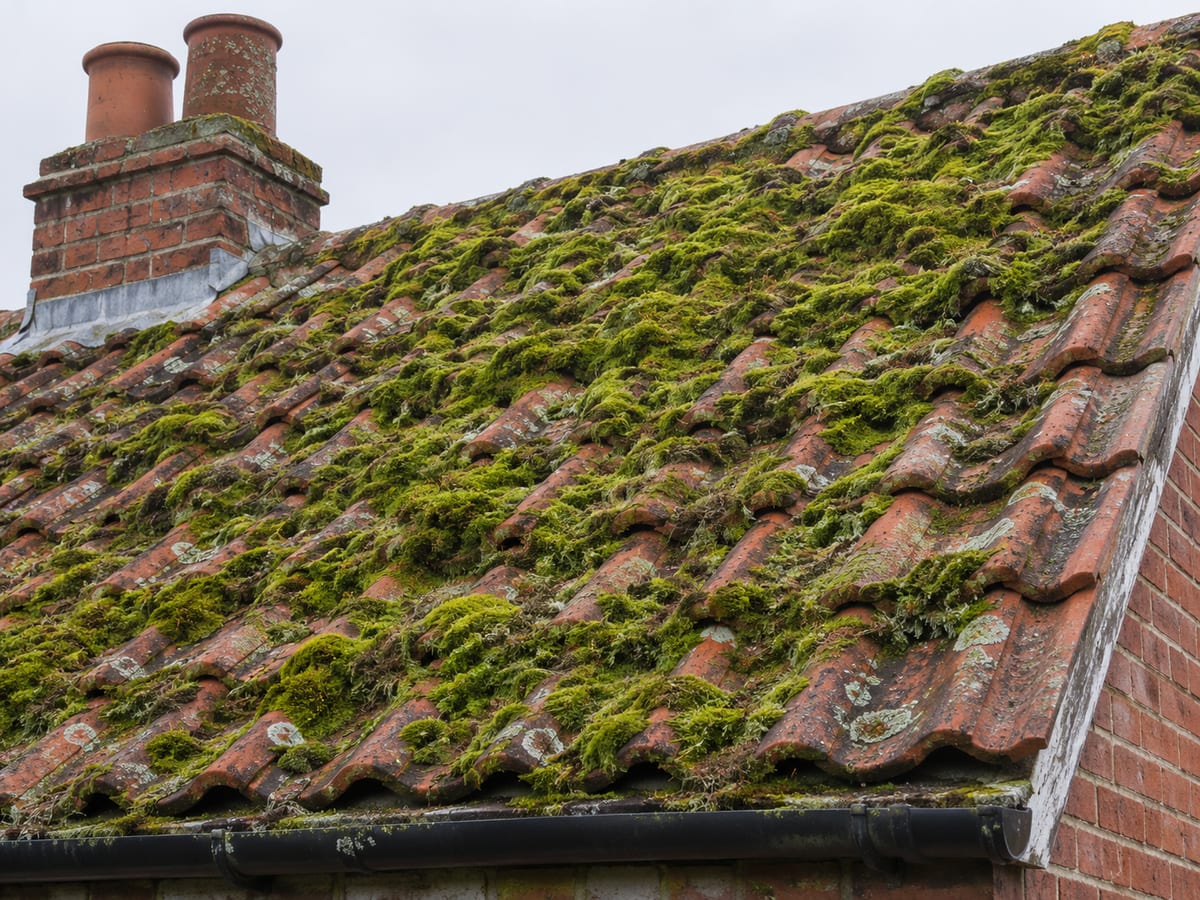
Concrete and clay tiles have a protective surface. A high-pressure jet held too close can remove the granule layer, open the surface and make the tile more porous. The roof looks clean because the dirty outer layer is gone — not because the tile is in better condition.
On older or already weathered tiles, that loss of surface can speed up frost damage and colour loss.
Water goes where you cannot see
Roof tiles rely on laps and overlaps to shed water. A jet aimed up the roof can force water under those laps, into the roof space or into the insulation. The damage may not appear for weeks.
Fragile slate, stone and old clay are particularly unforgiving. A tile that looks sound from the ground can be cracked or de-laminated underneath.
It makes a lot of mess
Pressure washing sends water, silt and moss debris across the roof, down the walls and into the gutters. Gutters that were already full can overflow, and the runoff can stain render, windows and paving.
A dry removal keeps the debris manageable and lets us clear the gutters as part of the job.
It does not treat the spores
Blasting the visible moss does not kill the spores left in the tile pores. Within a season or two, the growth can return. The clean looks effective because the roof is wet and bright; the biology has not changed.
A biocide treatment is what deals with the spores. The removal and the treatment are two different stages.
What we do instead
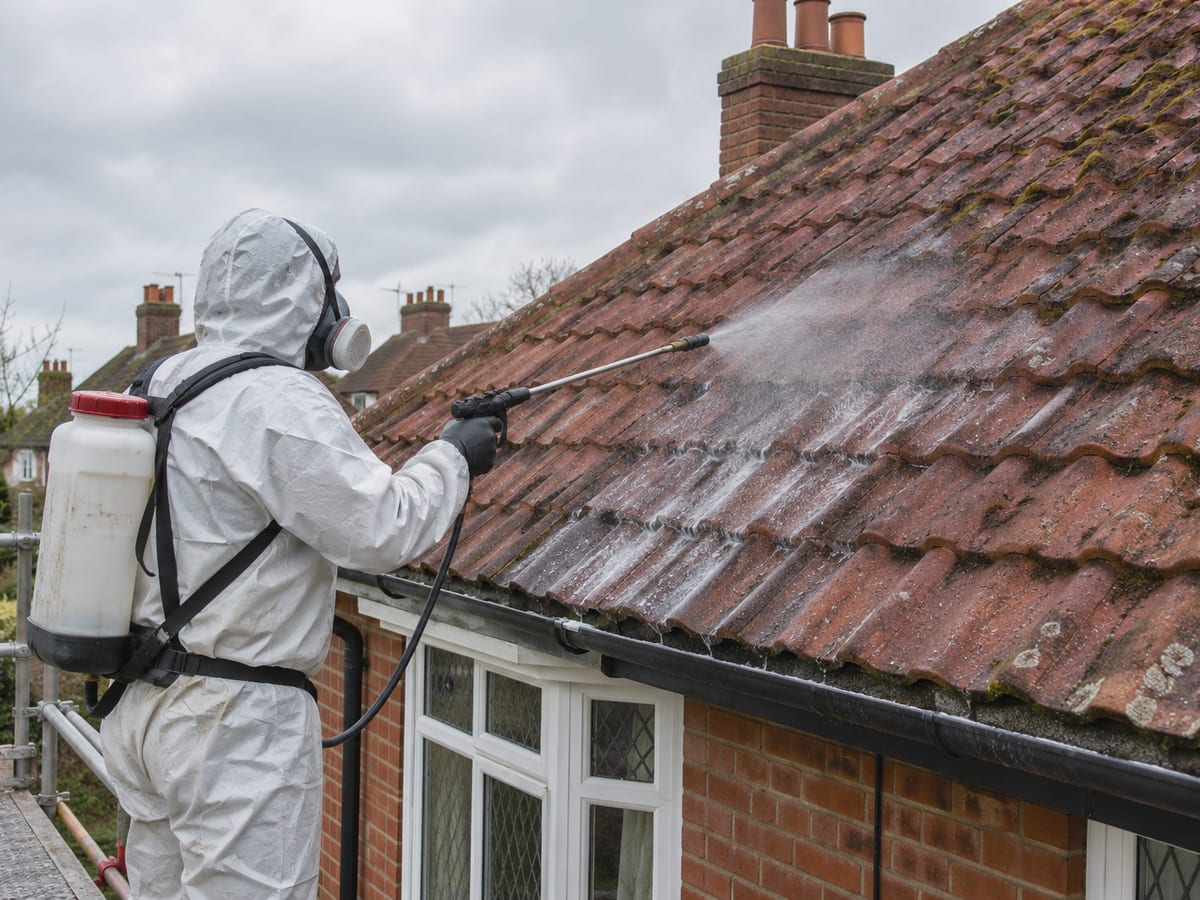
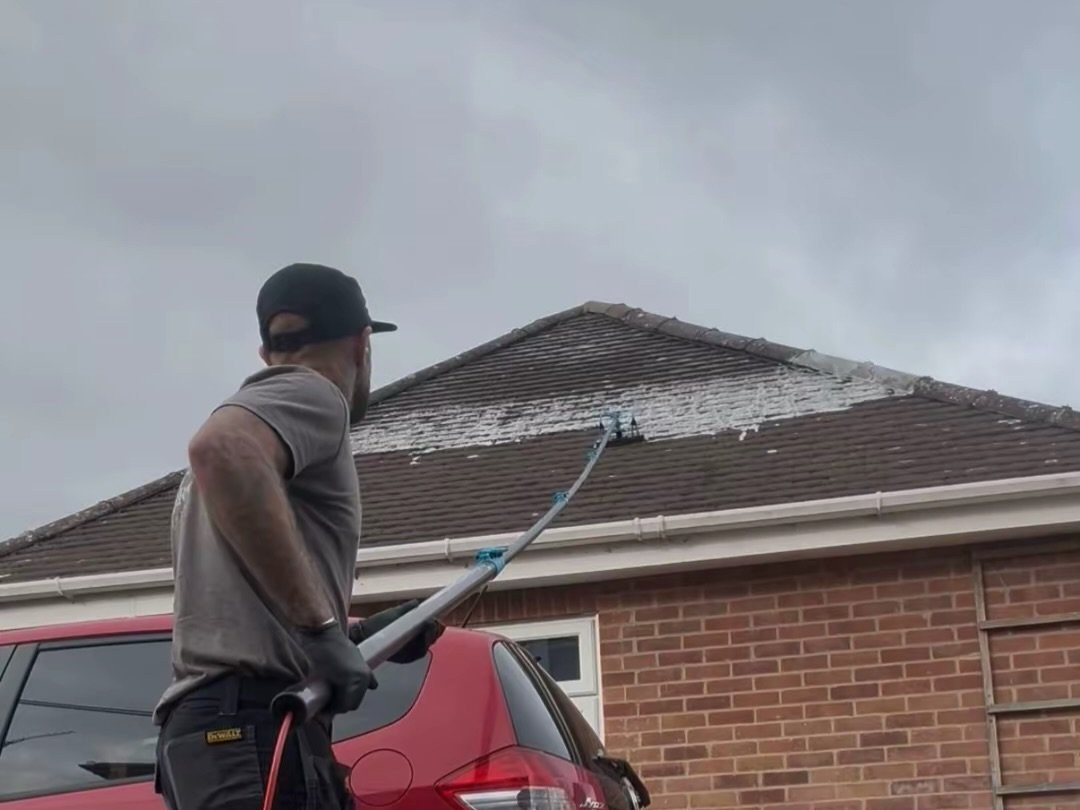
The biocide wash and final rinse still use water — just not a high-pressure jet. “No pressure washing” does not mean “no water at all”.
- Survey the roof from a MEWP before any work starts.
- Protect the ground, planting and gutters.
- Remove the growth dry with the Cobra Air system.
- Clear the gutters and valleys.
- Apply a low-pressure biocide treatment and document the finish.