
Our method
Clean the roof. Protect the tiles. Leave the site tidy.
0
Feet on the tiles
20 m
MEWP reach
4 yr
Written guarantee
01
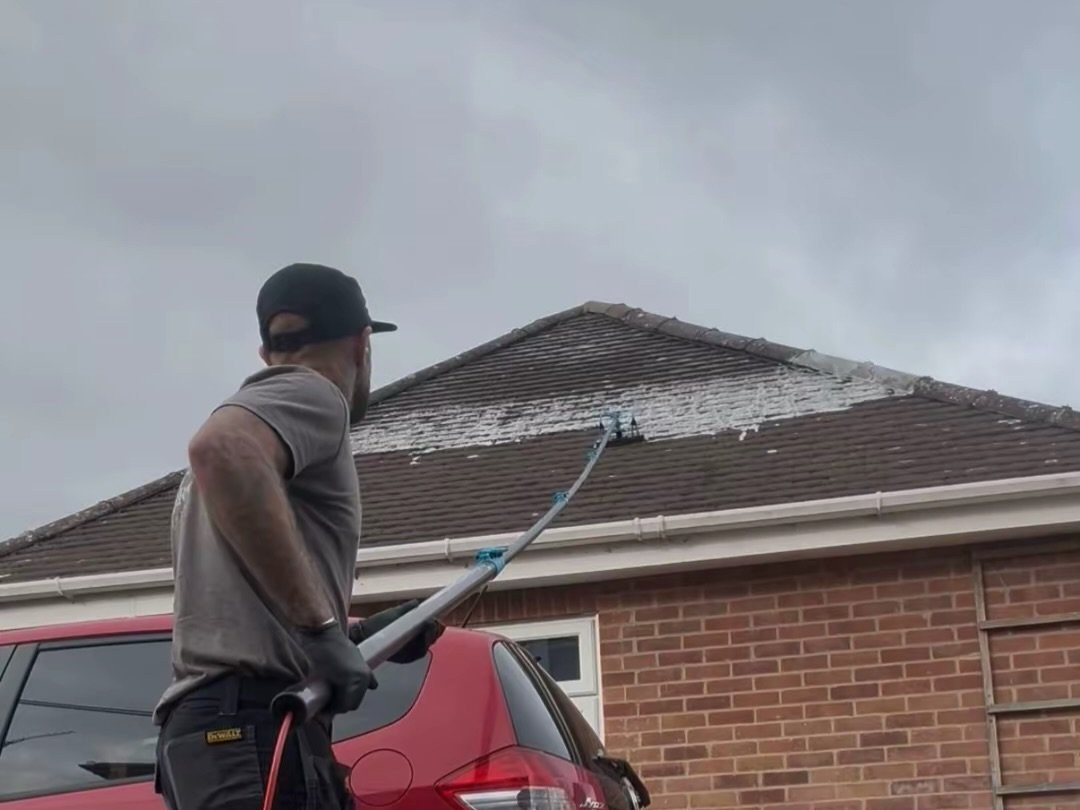
Inspect from above
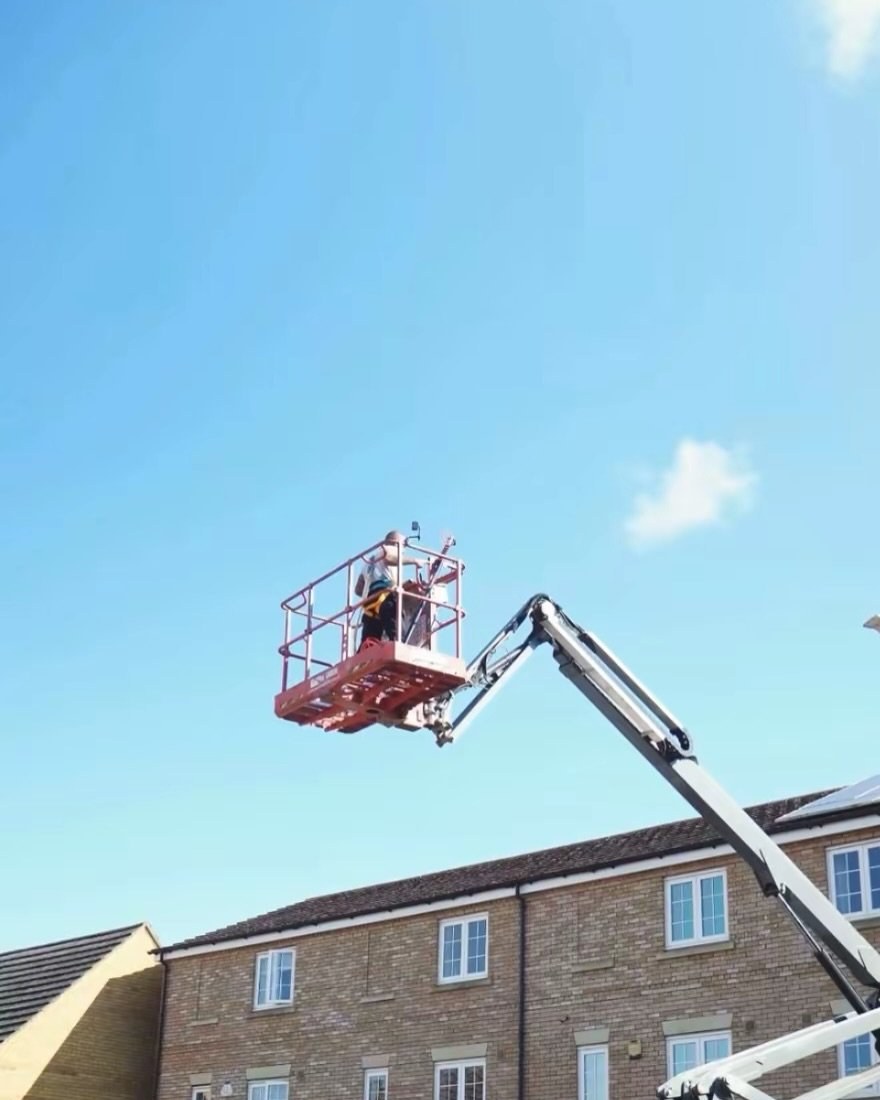
Before anything is touched, we photograph the roof from the MEWP basket. We check the covering, the flashings, the valleys and the gutter line. If the roof is already unsound, we stop and explain what needs fixing first.
- Close-up condition survey
- Photographs of any existing defects
- A clear decision on what can safely be cleaned
02
Protect the property
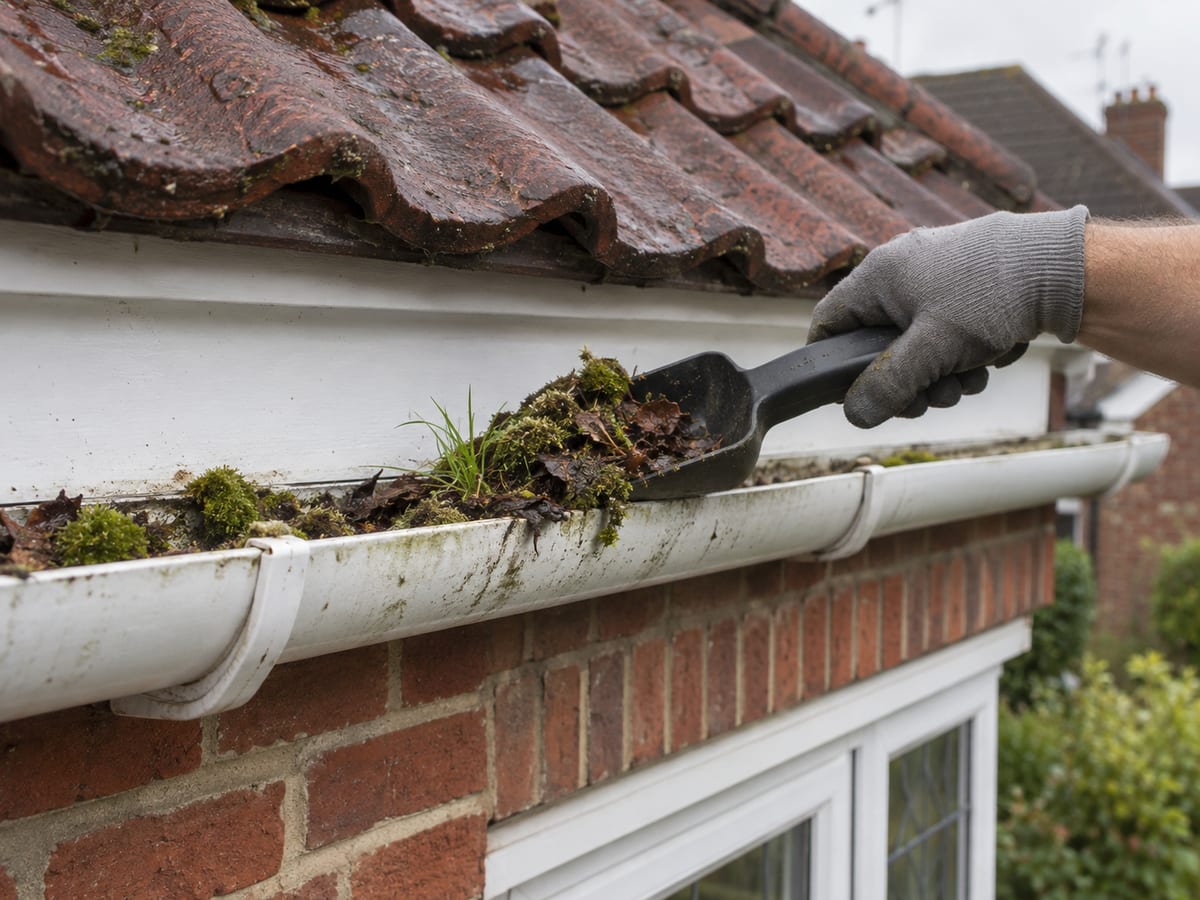
Ground sheets, gutter guards and plant protection go in before the first scraper. We work methodically so moss and grit are collected rather than washed into drains or planted borders.
- Ground and planting protection
- Gutter catchment and runoff control
- Pond and water-feature planning where needed
03
Scrape dry
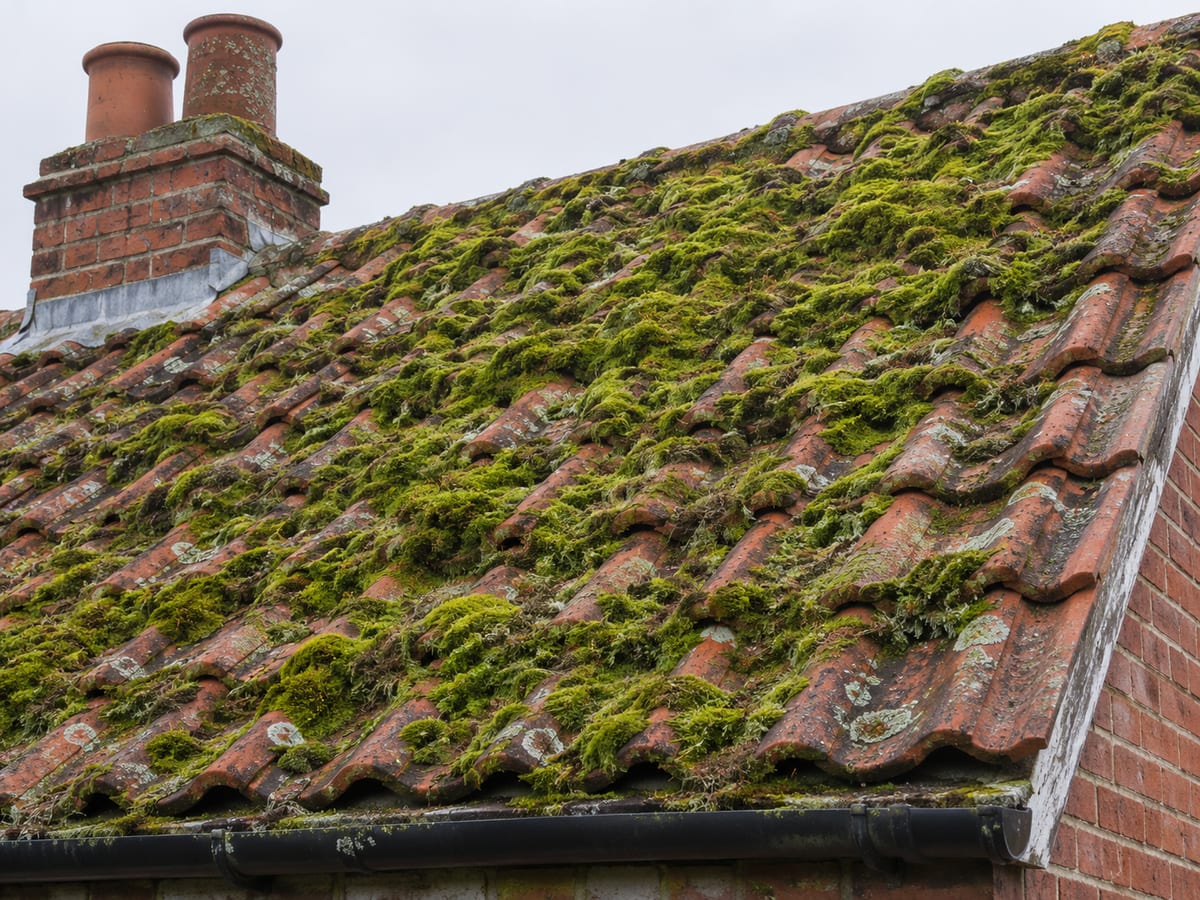
Compressed-air scrapers lift moss and lichen from the tile face. There is no high-pressure jet stripping granules or forcing water under the laps. We work from the basket, never from the roof covering.
- No pressure-washer abrasion
- No foot traffic on the tiles
- Gutters and valleys cleared as we go
04
Treat and clear
A low-pressure biocide wash is applied to kill the spores left in the tile pores. We isolate downpipes where needed, clear the gutters, photograph the finished roof and leave the site tidy.
- Low-pressure application
- Runoff and pond protection
- Written guarantee and aftercare notes
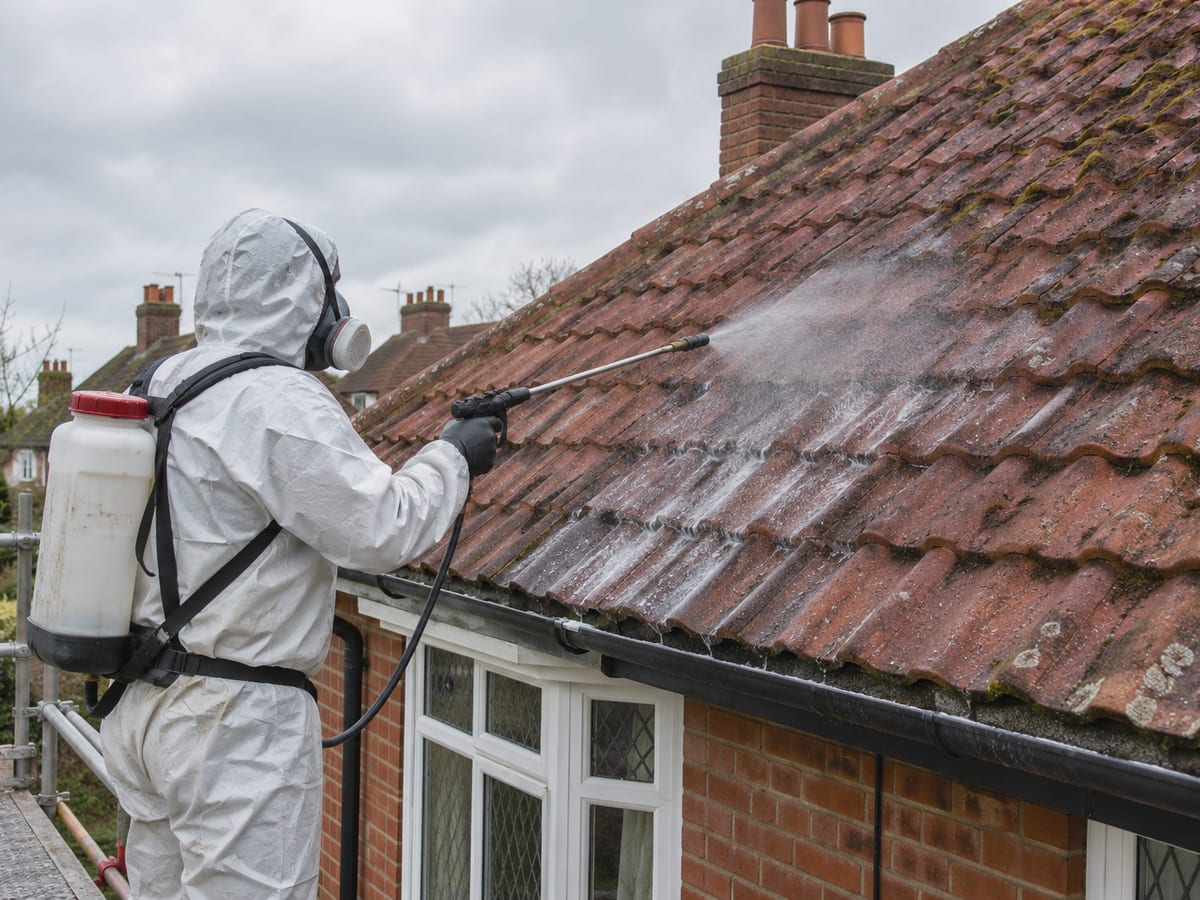
No water?
Be precise about what “no water” means.
The moss removal is dry. The biocide wash and the final rinse use water at low pressure. We would rather explain that clearly than repeat a marketing line that falls apart on the day.
What uses water
- Biocide application and equipment rinse
- Gutter flush and downpipe test
- Final clean-down of access surfaces
What does not
- Moss and lichen removal from the tiles
- Gutter and valley debris collection
- Roof and tile inspection
You will need an outdoor tap and a standard power point on the day. If either is not available, tell us before booking.
Ponds and runoff
The biocide is harmful to fish.
We plan for ponds and water features before the treatment is mixed. Downpipes are isolated where needed and runoff is controlled. This is not a disclaimer buried in the terms; it changes how we set up the job.
Before we start
- Cover or isolate ponds, fish tanks and water features.
- Disconnect or bag downpipes where runoff could reach water.
- Keep pets and children away from the treated area until dry.
Aftercare
What to expect after the clean.
Days 1–7
The roof may look patchy as the surface dries. A small amount of debris can appear in the gutters; this is normal.
Weeks 2–6
The biocide continues to break down staining. Rain helps the process. Do not scrub or pressure-wash the treated surface.
Months 3–12
The roof settles into its new colour. We ask you to tell us about any regrowth within the guarantee period so we can inspect it.
not claims
In writing, not just on the van
What we stand behind.
We commit to assessing the surface first, choosing the right method and leaving the site tidy. Where a result has limits, we explain them before the work starts. No vague promises and no “lifetime” language.
Ready when you are
A careful method, explained before we start.
Send a postcode and a photo, or call Charlie. We will tell you what the roof needs and whether we can access it safely.